What was wrong with living in Queen Square? What’s the deal with the servants at Uppercross, and why is Mary taking Mrs. Musgrove’s place? Learn the answers to these questions and more in this episode of My Cousin Jane.
Hey everybody, welcome back to My Cousin Jane. Today we’re going to be going through Persuasion, Chapter 6.
This chapter has some funny writing, some of my favorite writing in terms of irony and wit in the book. Because in this chapter, Anne is thrust into this ironic mediator role between the two big families in Uppercross. We have Charles Musgrove and his wife Mary, who’s Anne’s sister, in one house with their family, and then Charles’ parents with their two younger daughters in another house.
As we learn in this chapter, they don’t always get along, but they’re on this superficial niceties level, where they like each other enough, but they’re critical of one another behind the scenes. There’s some funny social commentary that happens in this chapter that we’ll talk about.
Where to Live in Bath
One of the first things I want to talk about is the Musgrove family, their daughters. Their interest in Kellynch is pretty minimal. They like Anne, but they don’t really like anyone else in the family. They are caught by this idea of, maybe we should go to Bath on holiday as well. They’re concerned about where they would stay in the city, and so they start talking to their father about this.
We’re going to listen to a little clip. Once again, all of our audio clips come from the talented Karen Savage, who has done these recordings for LibriVox and put these into the public domain. Here are the thoughts about where to stay in Bath:
“I hope we shall be in Bath in the winter; but remember, papa, if we do go, we must be in a good situation: none of your Queen Squares for us!” Persuasion, Chapter 6
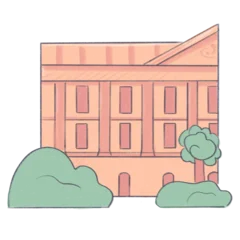
Queen Square was an architectural development built in the 1700s by John Wood the Elder. He was a famous architect, who most of his famous stuff was done in Bath, and he had a son, John Wood the Younger, who continued his work after his father died. Queen Square is a set of square-shaped terrace houses, what we would call townhouses in the United States.
Jane Austen actually lived there with her brother in 1799. While she was there, she mentions in a letter to her sister that she would find it more pleasant to be near the Sydney Gardens. The Sydney Gardens are on the other side of the River Avon in Bath. The Sydney Gardens had a labyrinth, they had fireworks displays, different shows, all kinds of fun little walks and stuff, and displays and events that would happen. A fashionable center of Bath in this time period.
Jane Austen does eventually live over there in 1801. She lives at Sydney Place. Maybe, well, we don’t know exactly what the Miss Musgroves were thinking when they said we want to be in a good situation rather than being in Queen Square, because Queen Square was a pretty nice place, and it still is. Perhaps they wanted to be closer to the Sydney Gardens.
In fact, Lady Dalrymple, when she comes to Bath, and we learn about her later in the book, stays at Laura Place, which is on the same side of the river as Sydney Gardens, well within walking distance.
Servant Ranks
We get into this back and forth between Mrs. Musgrove and Mary, talking to Anne about each other’s problems, each presenting their own side of the story. Anne tends to side with Mrs. Musgrove, because Anne realizes that Mary tends to see things from an ill-used hypochondriac point of view.
We’re going to talk about two of the things that are discussed. The first has to do with house servants.
She had this communication, moreover, from Mary. “Mrs Musgrove thinks all her servants so steady, that it would be high treason to call it in question; but I am sure, without exaggeration, that her upper house-maid and laundry-maid, instead of being in their business, are gadding about the village, all day long. I meet them wherever I go; and I declare, I never go twice into my nursery without seeing something of them. If Jemima were not the trustiest, steadiest creature in the world, it would be enough to spoil her; for she tells me, they are always tempting her to take a walk with them.” And on Mrs Musgrove’s side, it was, “I make a rule of never interfering in any of my daughter-in-law’s concerns, for I know it would not do; but I shall tell you, Miss Anne, because you may be able to set things to rights, that I have no very good opinion of Mrs Charles’s nursery-maid: I hear strange stories of her; she is always upon the gad; and from my own knowledge, I can declare, she is such a fine-dressing lady, that she is enough to ruin any servants she comes near. Mrs Charles quite swears by her, I know; but I just give you this hint, that you may be upon the watch; because, if you see anything amiss, you need not be afraid of mentioning it.” Persuasion, Chapter 6
Servants in Regency and Victorian times had ranks, just like the aristocracy and everyone else. Today, we’re just going to talk about the ladies’ ranks.
We had the housekeeper, who was in charge of everybody, and then below her, we had the ladies’ maids. Technically, the ladies’ maids were autonomous. They didn’t have to listen to the housekeeper, but they ranked below her. The ladies’ maids were generally appointed by the lady of the house. Each lady chose her own maid, and they would help her with dressing and things specific to the care of that lady.
Then we have the upper housemaids and the under housemaids, sometimes called the lower housemaids. Upper and lower here denotes rank, not location within the house. The upper housemaids got the nicer chores: decorating, arranging curtains, things like that. The under housemaids got the less pleasant jobs, such as cleaning and scrubbing and things that had to be done throughout the house, emptying chamber pots, things like that.
Then below them, we had the kitchen maids, who assisted the cook. Then in some places we had dairy maids, depending on if you were in a rural area or in the town. The dairy maids were in charge of, as the name implies, the dairy.
Then the nursery maid, or nursemaids. There was a nurse, who was the primary guardian of the children. Then we also had a nursemaid, who did all of the housekeeping in the nursery related to the children. The nursemaids would often, sometimes, take the children on walks and things like that.
Then below everyone, we have the scullery maid, who does all the hard work, the dirty work that nobody else wants to do.
Each of these ranks had requirements for dress, and privileges that went with them. For example, the ladies’ maids would often get hand-me-downs from the ladies that they served, but everyone else had specific uniforms they were supposed to wear. If you had a nursery maid who was dressing in fine clothes, that was way outside of what the servant ranks would allow. This was, in Mrs. Musgrove’s eyes, a big problem.
Meanwhile, most of the maids weren’t supposed to be out of the house unless they were on holiday. They had certain days off. Mary is worried that the housemaids of Uppercross are always trying to corrupt Jemima, her nursery maid, and they shouldn’t have been out of the house that often, is her concern. Just some interesting upstairs, downstairs kind of differences between the different ranks.
Dining Precedence
Our final thing we want to talk about today is another kind of concern shared by the people of the upper house, this time the Miss Musgroves, talking to Anne, and Mary, who are concerned about Mary taking the place of Mrs. Musgrove. Let’s listen to that clip.
Again, it was Mary’s complaint, that Mrs Musgrove was very apt not to give her the precedence that was her due, when they dined at the Great House with other families; and she did not see any reason why she was to be considered so much at home as to lose her place. And one day when Anne was walking with only the Musgroves, one of them after talking of rank, people of rank, and jealousy of rank, said, “I have no scruple of observing to you, how nonsensical some persons are about their place, because all the world knows how easy and indifferent you are about it; but I wish anybody could give Mary a hint that it would be a great deal better if she were not so very tenacious, especially if she would not be always putting herself forward to take place of mamma. Nobody doubts her right to have precedence of mamma, but it would be more becoming in her not to be always insisting on it. It is not that mamma cares about it the least in the world, but I know it is taken notice of by many persons.” Persuasion, Chapter 6
When a family went to a dinner party at somebody else’s house, there was a certain order in which they would enter the dining room. This order was based on precedence, or rank.
John Trusler, who was an English clergyman, wrote a number of books that were pretty influential during this time period. He wrote a book called The Honours of the Table, or Rules for Behaviour During Meals, and the Whole Art of Carving. In this book, he talks about the order, and the method by which people should enter dining rooms, how meals should be served, how roasts and fowls should be carved at table, and even goes on to talk about the proper way to go to a market and how to pick good food. All the rules of polite society related to mealtime.
In this book, I’m going to quote from this, he says:
In all public companies precedence is attended to, and particularly at table. Women have here always taken place of men, and both men and women have sat above each other, according to the rank they bear in life. Where a company is equal in point of rank, married ladies take place of single ones, and older ones of younger ones. When dinner is announced, the mistress of the house requests the lady first in rank, in company, to shew the way to the rest, and walk first into the room where the table is served; she then asks the second in precedence to follow, and after all the ladies are passed, she brings up the rear herself. The master of the house does the same with the gentlemen. John Trusler, The Honours of the Table (1788)
Here’s the point that’s talked about here in this audio clip we listened to. He goes on to say:
Among persons of real distinction, this marshalling of the company is unnecessary, every woman and every man present knows his rank and precedence, and takes the lead, without any direction from the mistress or the master. John Trusler, The Honours of the Table (1788)
Everyone should know what order they enter the dining room. Everyone probably knows that technically Mary Musgrove outranks Mrs. Musgrove, because Mary is the daughter of a baronet.
It’s considered rude by the Miss Musgroves, by the daughters, that Mary insists on this, that she rushes forward to take the lead, especially in such a small town as Uppercross, a small little country place. They consider this to be a bit rude, even though technically it’s Mary’s right to do it.
Mary, on the other hand, feels a little slighted. Why should she have to give place to Mrs. Musgrove, even if they’re just dining at home with friends? It doesn’t seem right. She’s the ranking lady in the place, because she’s the daughter of a baronet.
Once again, we see this obsession with rank, the Elliot pride that Mary has inherited, as is discussed over and over again in the book. This will come up in a couple of other places: rank and precedence and its importance, and Jane Austen’s witty criticism of this practice during this time period.
Conclusion
That wraps up this episode of My Cousin Jane. As always, if you enjoy the show and would like to help support us, please consider clicking the little donate button or subscribing to our newsletter. Either way, thanks so much for listening.