What exactly is rheumatic fever and how was it treated in Regency times? What’s wrong with living in Westgate buildings? Learn the answers to these questions and more in this episode of My Cousin Jane.
Welcome back to My Cousin Jane. Today we’re going to be talking about Persuasion, Volume 2, Chapter 5, or Chapter 17, depending on how your copy of Persuasion is numbered.
As always, we try to avoid discussion of things like literary theme, and instead focus on what you might think of as the behind-the-scenes featurette of your favorite movie.
Rheumatic Fever
In this chapter, Anne goes to visit an old school friend named Mrs. Smith. Unfortunately, Mrs. Smith has had a pretty horrible few years, as we hear in this clip by Karen Savage of LibriVox.org:
She was a widow and poor. Her husband had been extravagant; and at his death, about two years before, had left his affairs dreadfully involved. She had had difficulties of every sort to contend with, and in addition to these distresses had been afflicted with a severe rheumatic fever, which, finally settling in her legs, had made her for the present a cripple. She had come to Bath on that account, and was now in lodgings near the hot baths, living in a very humble way, unable even to afford herself the comfort of a servant, and of course almost excluded from society. Persuasion, Chapter 17
I want to talk about poor Mrs. Smith’s rheumatic fever. Rheumatic fever is a form of rheumatism, usually caused by an infection that was the result of scarlet fever or strep throat.
Strep throat and scarlet fever are both caused by the same bacteria. Fortunately, both are very easily treatable by antibiotics. Unfortunately, in many parts of the world, those treatments are not available, and rheumatic fever is still a serious problem.
Unfortunately for Mrs. Smith, antibiotics weren’t available at all during her time. When left untreated, about three out of every 100 scarlet fever and strep throat cases will lead to rheumatic fever, which can damage the heart, brain, joints, and skin and can cause crippling arthritis.
The treatment for rheumatic fever today is a strong course of antibiotics, usually a prolonged course to try to root out the infection, but the treatment for rheumatic fever during Regency times was a lot less pleasant.
Author Diane H. Morris wrote a book called Rosings Park, which is a parallel story to Pride and Prejudice, but from Miss Anne de Bourgh, Lady Catherine de Bourgh’s daughter, from her point of view. You should definitely check out that book, but in researching the book, she wanted to know more about what made Miss de Bourgh so “sickly and cross,” and her research led her to conclude that Anne de Bourgh, like Mrs. Smith in Persuasion, was probably suffering from rheumatic fever brought on by either strep throat or scarlet fever.
The treatment plan she discovered that was used during Regency times involved using leeches, enema treatments, and taking rhubarb and ipecac in order to cause vomiting, and other unpleasant things.
The fact that Mrs. Smith could keep up her good spirits during her medical ordeals might be because she was too poor to afford the standard treatment that Miss de Bourgh would have gone through, because Miss de Bourgh, being the daughter of Lady Catherine de Bourgh, would have had access to the latest and greatest medical treatments of the age, while Mrs. Smith was left to the ministrations of Nurse Rooke.
Westgate Buildings
One thing we know for sure about Mrs. Smith is that she lives in Westgate Buildings, much to Sir Walter’s amazement and shock. As you listen to this clip, try to determine for yourself whether Sir Walter is most offended by Mrs. Smith’s poverty, her address, or her last name.
They were not much interested in anything relative to Anne; but still there were questions enough asked, to make it understood what this old schoolfellow was; and Elizabeth was disdainful, and Sir Walter severe.
“Westgate Buildings!” said he, “and who is Miss Anne Elliot to be visiting in Westgate Buildings? A Mrs Smith. A widow Mrs Smith; and who was her husband? One of five thousand Mr Smiths whose names are to be met with everywhere. And what is her attraction? That she is old and sickly. Upon my word, Miss Anne Elliot, you have the most extraordinary taste! Everything that revolts other people, low company, paltry rooms, foul air, disgusting associations are inviting to you. But surely you may put off this old lady till to-morrow: she is not so near her end, I presume, but that she may hope to see another day. What is her age? Forty?”
“No, sir, she is not one-and-thirty; but I do not think I can put off my engagement, because it is the only evening for some time which will at once suit her and myself. She goes into the warm bath to-morrow, and for the rest of the week, you know, we are engaged.”
“But what does Lady Russell think of this acquaintance?” asked Elizabeth.
“She sees nothing to blame in it,” replied Anne; “on the contrary, she approves it, and has generally taken me when I have called on Mrs Smith.”
“Westgate Buildings must have been rather surprised by the appearance of a carriage drawn up near its pavement,” observed Sir Walter. “Sir Henry Russell’s widow, indeed, has no honours to distinguish her arms, but still it is a handsome equipage, and no doubt is well known to convey a Miss Elliot. A widow Mrs Smith lodging in Westgate Buildings! A poor widow barely able to live, between thirty and forty; a mere Mrs Smith, an every-day Mrs Smith, of all people and all names in the world, to be the chosen friend of Miss Anne Elliot, and to be preferred by her to her own family connections among the nobility of England and Ireland! Mrs Smith! Such a name!” Persuasion, Chapter 17
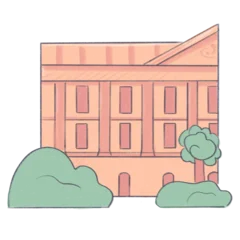
First, the area near Westgate Buildings is quite historic. Shortly after the Romans established Bath in the year 60 AD, which they called Aquae Sulis, they built a defensive wall around the area.
The wall had several gates, and the one on the western side of the city was named, rather uncreatively, Westgate. The buildings where Mrs. Smith lived were named Westgate Buildings because they were built along the street near where that section of the original wall was built.
Westgate Buildings is just around the corner from the Roman Baths Museum today, which houses the Roman baths and the Pump Room and is also next to the beautiful Bath Abbey. Ironically, this area is one of the most visited sections of Bath today. If only Sir Walter could see it now.
Mr. Elliot’s Character
I want to close with one final clip regarding Anne’s views on Mr. Elliot’s character, which is interesting.
Mr Elliot was rational, discreet, polished, but he was not open. There was never any burst of feeling, any warmth of indignation or delight, at the evil or good of others. This, to Anne, was a decided imperfection. Her early impressions were incurable. She prized the frank, the open-hearted, the eager character beyond all others. Warmth and enthusiasm did captivate her still. She felt that she could so much more depend upon the sincerity of those who sometimes looked or said a careless or a hasty thing, than of those whose presence of mind never varied, whose tongue never slipped. Persuasion, Chapter 17
I think this passage is interesting because Austen’s books are sometimes characterized as being all the same, but her heroines are all very different in their own behaviors and tastes, and in what they consider to be a suitable character in a man.
Consider the difference between Anne’s views on Mr. Elliot compared to Fanny Price’s views on Mr. Crawford. How would Anne compare Mr. Bingley to Mr. Darcy? She probably wouldn’t have liked Wickham for many of the same reasons that she distrusts Mr. Elliot. What would she have thought of Colonel Brandon?
Conclusion
That wraps up this episode of My Cousin Jane. As always, if you enjoy the show and would like to help support us, please consider clicking the little donate button or subscribing to our newsletter. Either way, thanks so much for listening.